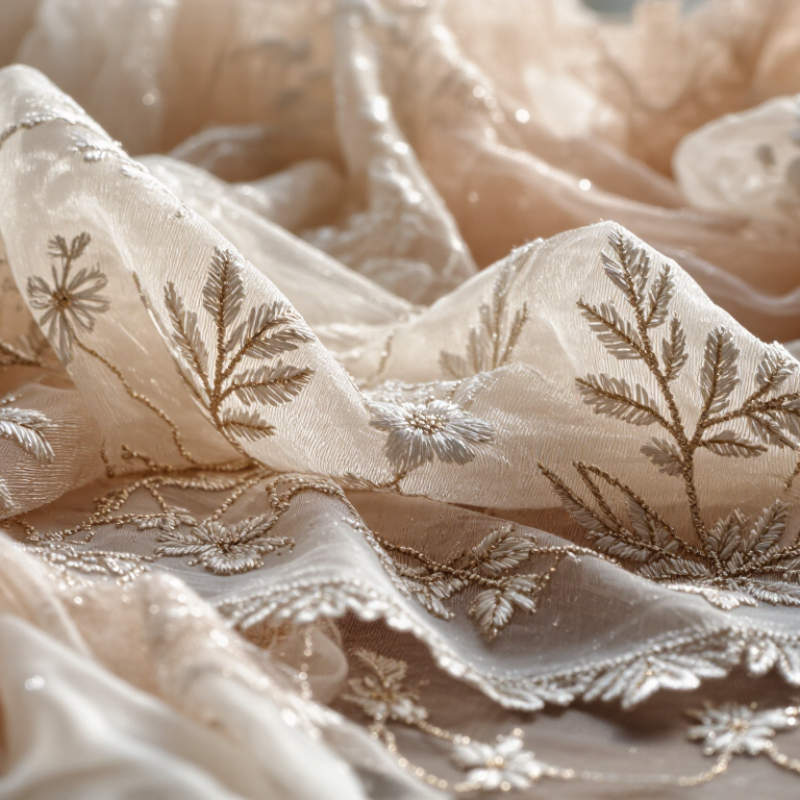
2026 Top Embroidery Sheer Fabric Trends for Global Buyers

The 2026 market for Embroidery Sheer Fabric is moving toward lighter construction, richer surface detail, and more responsible sourcing. Global fiber production reached approximately 132 million tonnes in 2023, according to Textile Exchange’s Materials Market Report 2024. The report expects this figure to approach 160 million tonnes by 2030. That growth creates opportunity, but also pressure. Buyers now examine fiber origins, chemical management, durability, and production transparency.

Grand View Research valued the global textile market at about USD 1.03 trillion in 2022. It forecasts steady growth through 2030, supported by fashion, interiors, and technical applications. Within this landscape, embroidered tulle, organza, mesh, and voile are gaining attention. Soft ivory grounds, matte floral threads, metallic accents, and laser-cut edges appear across bridal, occasionwear, and premium home décor. Small details matter.

Debbie McKeegan, founder of Texintel and a digital textile printing specialist, states that “digital textile printing is a sustainable technology that can help to reduce waste, water, and energy consumption.” Her observation is relevant when embroidery suppliers combine digital artwork, sampling, and targeted production. However, digital tools do not automatically make a fabric sustainable. That assumption needs questioning. Thread composition, backing removal, reject rates, packaging, and shipping still affect the final footprint.

For global buyers, the strongest 2026 collections will balance visual delicacy with measurable performance. They should request test data, recycled-content evidence, colorfastness results, and clear factory information. Certifications can help, but they require verification. Trends are useful. Evidence is better.

2026 Top Embroidery Sheer Fabric Trends for Global Buyers

Key Characteristics of 2026 Embroidery Sheer Fabric Trends

In 2026, embroidery sheer fabric is moving toward lighter surfaces with stronger visual definition. Buyers are requesting breathable bases, neat stitching, and controlled transparency for dresses, overlays, and occasion garments. Fine mesh, voile, and soft tulle remain important, but quality depends on recovery and seam behavior. During sampling, I inspect the fabric under daylight and warm indoor light. A motif that looks refined online may appear crowded in production.

The strongest trend is tactile contrast. Raised petals, narrow satin lines, and subtle geometric embroidery create depth without excessive weight. Tone-on-tone designs support quiet luxury, while carefully placed metallic threads add evening appeal. However, heavy decoration can reduce softness and increase handling costs. Small patterns often perform better across different garment sizes. They also create fewer placement problems during cutting.

Global buyers are paying closer attention to fiber content, colorfastness, shrinkage, and embroidery durability. Suppliers should provide test results, production samples, and clear origin records before bulk orders. Lower-impact fibers and efficient production methods are gaining interest, but sustainability claims still require evidence. This area remains imperfect. A beautiful sample may fail after washing, or a delicate base may tear during sewing. Practical testing should guide the final purchase decision.

Leading Embroidery Sheer Fabric Styles for Global Buyers

In 2026, leading embroidery sheer fabric styles will balance transparency, texture, and practical wearability. Soft floral vines remain popular for evening dresses, bridal layers, and lightweight curtains. Buyers are also requesting geometric embroidery, especially fine grids, curved lines, and small repeating motifs. These patterns create structure without making sheer fabric look heavy. Subtle metallic threads can add evening appeal, but excessive shine may reduce everyday versatility. Three-dimensional petals and raised outlines offer strong visual interest. They also need careful handling during packing and sewing.

Tips: Request fabric swatches before placing large orders. Check embroidery density, thread security, colorfastness, shrinkage, and edge stability. Hold each sample against natural light. This reveals uneven transparency and hidden flaws. Confirm fiber content and testing documents with the supplier. Production consistency matters more than one attractive sample.

Global buyers should match style choices with their target market and end use. Lightweight polyester blends may suit commercial collections, while silk-based options offer a softer hand feel. However, silk can require stricter care and higher cost control. I would not assume a dramatic design will sell everywhere. Some customers prefer quiet embroidery and breathable comfort. Minimum order quantities, lead times, roll width, and packaging protection should be reviewed early. Small flaws matter. A loose thread or uneven border can weaken an otherwise refined fabric.

Innovative Materials, Colors, and Decorative Techniques

2026 Top Embroidery Sheer Fabric Trends for Global Buyers

Innovative materials are reshaping embroidered sheer fabrics in 2026. Recycled polyester mesh offers stable sizing and consistent embroidery performance. Bio-based fibers add a softer hand feel, but they may require gentler washing tests. Fine nylon tulle remains useful for lightweight evening layers and detailed motifs. Metallic yarn creates controlled highlights without covering the base fabric. Texture matters. Experienced sourcing teams should check yarn tension, fabric recovery, and seam behavior before approving bulk production.

Color direction is moving beyond plain white and black. Mineral beige, mist blue, muted saffron, and soft moss green suit modern collections. Deep plum and ink blue add contrast on transparent grounds. Tonal embroidery is gaining attention because it creates depth without excessive shine. Small floral trails, geometric vines, and scattered micro-motifs can reduce visual weight. A bold palette can fail when thread and fabric absorb light differently.

Decorative techniques are becoming more dimensional. Corded embroidery, selective beadwork, raised satin stitches, and delicate appliqué give sheer surfaces a tactile finish. Laser-cut edges can frame panels, while controlled flocking adds a velvet-like shadow. However, heavier decoration may reduce drape and increase shipping damage. Some samples look beautiful but feel stiff. Buyers should request colorfastness, abrasion, shrinkage, and needle-puncture testing. Documentation matters, although smaller suppliers may overlook it. That gap deserves careful review.

Regional Market Preferences and Buyer Applications

In 2026, embroidery sheer fabric buying is increasingly shaped by regional use, climate, and dress codes. Buyers in Western Europe often prefer fine mesh, restrained floral embroidery, and soft neutral colors. These fabrics suit bridal overlays, occasion dresses, and refined window panels. North American buyers usually request wider widths, stable edges, and repeat patterns for layered gowns, resort apparel, and event décor. They also examine colorfastness under strong retail lighting.

Across East Asia, lightweight tulle with precise geometric or botanical motifs supports blouses, sleeves, and coordinated sets. Smaller motifs help manufacturers control placement waste. In the Gulf region, buyers often seek denser embroidery, richer metallic-looking threads, and broader widths for modest formalwear. Breathable bases remain important in warm interiors. African fashion producers may value bold scale, durable ground fabrics, and adaptable borders for ceremonial garments and accessories. Preferences vary widely. Not every sample performs.

For buyers, sampling should mirror the final product, not merely show a beautiful swatch. Test seam strength, snag resistance, drape, wash behavior, and embroidery stability after cutting. A bridal supplier may prioritize transparent softness, while a curtain workshop needs dimensional stability and consistent repeats. Apparel factories should request production-width samples and verify needle performance before bulk ordering. Some assumptions still need testing. Metallic effects can photograph well but may feel heavy in warm climates. Digital color references also shift under showroom lighting. Experienced sourcing teams record fiber content, embroidery density, usable width, and inspection tolerances before approval.

2026 Top Embroidery Sheer Fabric Trends for Global Buyers - Regional Market Preferences and Buyer Applications

Indicative 2026 sourcing guide based on established apparel, occasionwear, home-textile, and regional dress applications. Preference levels are qualitative rather than market-share estimates.

Region Primary Buyer Segments Preferred Sheer Fabric Base Typical Embroidery Direction Preferred Color and Surface Effect Key Performance Priorities Common Buyer Applications 2026 Sourcing Considerations
North America Contemporary apparel, bridalwear, occasionwear, premium home décor Tulle Organza Voile
Lightweight bases, commonly about 20–80 g/m² depending on construction
Clean botanical layouts, geometric linework, tonal embroidery, and strategically placed motifs for panel cutting Ivory, white, black, nude, soft pastels, and low-shine metallic accents High: soft hand feel, stable embroidery, low snagging, color consistency, easy cutting Bridal overlays, evening dresses, blouses, skirts, sleeves, lingerie panels, decorative curtains Buyers increasingly review recycled-content options, fiber disclosure, traceability, and restricted-substance compliance
Western Europe Fashion labels, couture and occasionwear ateliers, interior-textile wholesalers Fine Tulle Silk-Look Organza Lace Mesh Refined floral embroidery, openwork effects, small-scale repeats, archival-inspired motifs, and understated texture Natural neutrals, ecru, powder shades, deep navy, charcoal, and muted metallic threads High: drape, lightweight construction, material transparency, durability, and responsible production documentation Luxury dresses, tailored overlays, shirts, lingerie, scarves, millinery details, lampshades, and soft furnishings Recycled or certified fibers, chemical compliance, repairability, digital product information, and lower-impact finishing are important buying topics
United Kingdom & Ireland Bridal retailers, formalwear makers, costume suppliers, independent designers Tulle Net Voile Vintage florals, lace-inspired embroidery, botanical borders, pearl-like embellishment, and flexible custom motifs White, ivory, blush, pale blue, black, and heritage-inspired muted tones High: reliable small-batch availability, shade matching, easy hemming, and resistance to distortion Wedding veils, bridal sleeves, occasion dresses, dancewear, theatrical costumes, hats, and event décor Short lead times, sample cards, small minimum order quantities, and dependable replenishment are valuable for specialist buyers
Middle East Modest fashion, abaya and kaftan manufacturers, couture, ceremonialwear retailers Chiffon Organza Tulle Mesh Large-scale florals, arabesque geometry, borders, medallions, dense sequin work, and ornate placement embroidery Black, ivory, champagne, jewel tones, gold, silver, and tone-on-tone combinations High: visual richness, opacity control through layering, colorfastness, dimensional stability, and embellishment security Abayas, kaftans, jalabiyas, headscarves, bridalwear, evening gowns, shawls, and ceremonial décor Buyers often require coordinated embroidery panels, premium metallic effects, scalable repeat sizes, and dependable quality for seasonal occasions
South Asia Ethnicwear exporters, bridalwear manufacturers, festive-fashion retailers, tailoring houses Net Organza Chiffon Tulle Floral vines, paisley-inspired forms, dense borders, all-over embroidery, sequins, beads, and mixed-thread ornamentation Bright jewel tones, red, pink, green, royal blue, ivory, gold, and silver High: embellishment strength, wash performance, color brilliance, border continuity, and cost efficiency Sarees, lehengas, salwar suits, dupattas, bridal veils, tunics, festive tops, and decorative home textiles Demand is typically strongest for coordinated border-and-body designs, flexible widths, repeatable color lots, and mixed embellishment options
East Asia Fashion manufacturers, bridal and formalwear producers, contemporary designers, fabric retailers Fine Organza Tulle Sheer Jacquard Mesh Minimal botanical motifs, micro-embroidery, abstract geometry, translucent layering, and precise placement designs White, black, cool grey, pale blue, soft pink, transparent effects, and restrained metallic highlights High: precision, clean reverse side, low slippage, consistent transparency, and fine stitch definition Modern dresses, blouses, jackets, bridal overlays, skirts, accessories, and layered fashion details Digital sampling, accurate repeat development, compact packaging, technical specifications, and consistent lot-to-lot quality support purchasing decisions
Southeast Asia Resortwear, modest fashion, occasionwear, apparel exporters, lifestyle brands Voile Chiffon Lightweight Mesh Organza Tropical botanicals, leaves, small florals, airy borders, tonal embroidery, and lightweight decorative motifs White, cream, tropical colors, soft brights, earth tones, and pastel palettes High: breathability, light weight, soft touch, colorfastness, and comfort in warm and humid conditions Resort dresses, blouses, modest tops, scarves, kimono-style layers, lingerie, and lightweight curtains Breathable constructions, quick-drying performance, low formaldehyde finishing, and efficient packing are relevant for warm-climate supply chains
Latin America Bridalwear, quinceañera and celebrationwear, dancewear, lingerie, fashion wholesalers Tulle Lace Mesh Organza Net Large florals, romantic lace effects, decorative borders, bright embroidery, sequins, and layered volume effects White, ivory, coral, fuchsia, turquoise, black, gold, and vivid multicolor combinations Medium to high: volume retention, abrasion resistance, color intensity, and ease of embellishment Bridal gowns, celebration dresses, dance costumes, partywear, skirts, sleeves, veils, and event decoration Flexible order quantities, strong color cards, coordinated trims, and designs suitable for special-event calendars can improve commercial performance
Africa Occasionwear, modest fashion, formal tailoring, culturalwear, apparel wholesalers Organza Chiffon Net Voile Bold florals, geometric patterns, strong borders, metallic embroidery, high-contrast motifs, and statement surfaces Royal blue, emerald, orange, red, purple, black, white, gold, and saturated multicolor palettes High: colorfastness, abrasion resistance, embroidery attachment, breathable layering, and visual impact Kaftans, gowns, headwraps, tunics, skirts, ceremonial garments, sleeves, and decorative overlays Buyers often value vibrant shade ranges, wider fabric options, durable embellishment, accessible minimum quantities, and reliable export packing
Oceania Resortwear, bridal boutiques, independent fashion designers, event and home décor suppliers Voile Fine Tulle Organza Coastal botanicals, shells, leaves, delicate florals, open embroidery, and light decorative placement White, sand, cream, ocean blue, sage, pale pink, and natural-looking neutrals High: lightweight comfort, breathability, UV-aware color stability, soft drape, and easy care Beach weddingwear, resort dresses, blouses, cover-ups, scarves, curtains, and event installations Low-volume sampling, compact shipping, recycled-fiber alternatives, and fabrics suited to warm-weather dressing are common sourcing priorities
Material reference: Common sheer embroidery bases include tulle, net, organza, chiffon, and voile. Final suitability depends on yarn type, construction, embroidery density, finishing, colorfastness, dimensional stability, and end-use testing. Preference ratings in this table are directional planning indicators and should be validated with regional buyers and product-specific samples.

Quality, Sustainability, and Sourcing Considerations

2026 Top Embroidery Sheer Fabric Trends for Global Buyers

Quality, Sustainability, and Sourcing Considerations

Embroidered sheer fabrics are becoming lighter, softer, and more detailed in 2026. Buyers should inspect the base cloth, embroidery tension, and edge stability before placing large orders. A reliable fabric should keep its shape after washing and resist loose threads during handling. Ask for test samples, not only digital images. Small flaws become costly across thousands of meters.

Sustainability needs practical evidence. Request information about fiber origin, dyeing processes, wastewater controls, and packaging materials. Recycled or bio-based fibers may reduce impact, but their performance still requires testing. A low-impact label is not proof by itself. Supplier records can be incomplete, and buyers should recognize that weakness. Independent laboratory checks can confirm colorfastness, shrinkage, and restricted-substance compliance. Regional requirements may differ, so sourcing teams should review current import rules with qualified advisors.

Tips: Compare at least three samples. Check transparency under daylight. Rub embroidered areas with a white cloth. Review production capacity before approving the design. Keep written inspection standards. Visit the facility when practical, though travel does not guarantee perfect results. A thoughtful buyer should question attractive claims and record every unresolved issue.

2026 Top Embroidery Sheer Fabric Trends for Global Buyers

Typical fabric-weight ranges help buyers compare transparency, drape, embroidery stability, and shipping efficiency across major sheer constructions.

Lightweight tulle and organza support highly transparent fashion applications, while voile and embroidered net generally provide greater body and embroidery support. Final sourcing decisions should also verify fiber composition, recycled-content claims, colorfastness, shrinkage, embroidery performance, and recognized textile certifications through supplier documentation and testing.

Call Now Button