
What Is the Best Charcuterie Board Set for 2026?

Choosing the best Charcuterie Board Set for 2026 means looking beyond a polished product photo. A useful set should make serving easier, feel comfortable to handle, and suit the space where you plan to use it. Think about a board large enough for sliced cheese, crackers, and fruit, but not so bulky that storing it becomes a chore. Small details matter. A steady surface, smooth edges, and utensils that feel balanced can make a casual gathering more pleasant.

This guide compares common features, materials, sizes, and accessories to help you find a set that fits your routine. Wood offers a warm, classic look, while slate or other materials may suit different serving styles. Check whether the board is easy to clean and whether the included knives are practical for the foods you serve. Product descriptions can be vague, so dimensions and care instructions deserve a closer look. A generous accessory count does not always mean better value.

There is no single best choice for every host. A compact set may work well for a small apartment, while frequent entertainers may prefer more serving room and sturdy tools. Personal taste still plays a part, and some features matter less than marketing suggests. Use the comparisons ahead to weigh everyday usefulness against appearance, price, and upkeep—and to choose a set you will actually reach for.
What Is the Best Charcuterie Board Set for 2026?

What a Charcuterie Board Set Includes

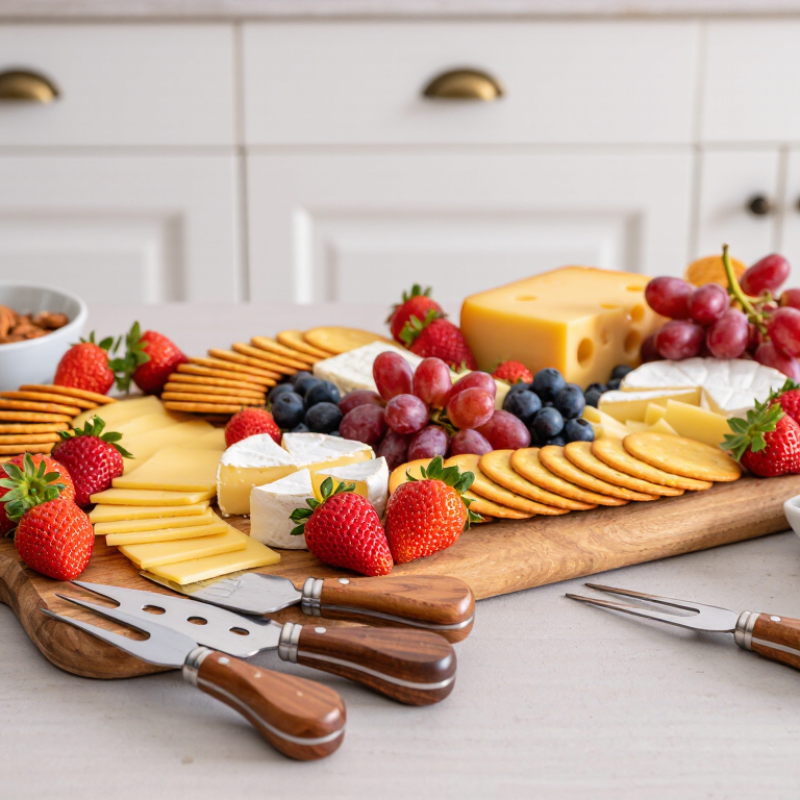
A practical charcuterie board set includes a serving board, a cheese knife, a small fork, and spreaders. Small bowls help contain olives, honey, nuts, or jam. Some sets add labels and slate markers, but these are optional. Choose a board with enough room to separate soft cheese from crackers and juicy fruit. A washable, nonporous surface is easier to clean after serving. Wood looks warm, though it needs careful drying and maintenance.

The Specialty Food Association’s 2024 State of the Specialty Food Industry report put U.S. specialty-food sales at about $207 billion in 2023, up 6.5%. That growth helps explain the range of cheeses, cured meats, and condiments people may want to serve; it does not mean every set needs many pieces. In practice, a crowded board can be awkward to use. I would prioritize sturdy handles and tools that match the foods served. Keep it simple. The USDA Food Safety and Inspection Service advises refrigerating perishable foods within two hours, or one hour when temperatures exceed 90°F. A set is more useful when its pieces are easy to wash and put away.

Key Criteria for Choosing a Set in 2026

The best charcuterie board set for 2026 should fit the way you serve, not just look polished in a product photo. Start with the board’s size: a small table may suit a compact set, while a larger gathering needs room for cheeses, sliced fruit, and crackers without crowding. Check that the board sits firmly on the table. Wobbling is annoying.

Look for food-contact-safe materials, smooth edges, and utensils that feel balanced in your hand. A set with a cheese knife, spreader, and serving forks covers many everyday needs; extra tools can become drawer clutter. Consider cleanup, too. A board that washes easily is practical, while wood may need more careful drying and occasional conditioning. I would not choose a set on appearance alone. A glossy finish can hide details that matter after repeated use, and product descriptions do not always show how sturdy a handle feels.

Tips: Measure your storage space before buying. Check how the board should be cleaned, and make sure the utensils have a secure place to store. A slightly imperfect layout is fine if the pieces are comfortable and useful.

Board Materials, Shapes, and Sizes

What Is the Best Charcuterie Board Set for 2026?

Board Materials, Shapes, and Sizes

The best board is one that suits your serving habits and is easy to care for. Hardwood offers a sturdy surface and a warm look, but it needs prompt drying and occasional conditioning with food-safe mineral oil. Bamboo is lighter and often budget-friendly, though its harder surface may show knife marks over time. Slate and marble look striking, but they are heavy and can be less forgiving on knives. I still find that appearance can sway a choice more than cleanup deserves.

Shape and size affect how comfortably guests can reach the food. A rectangular board works well on a narrow table and leaves room for small bowls. Round boards make a nice shared centerpiece, but can feel crowded when several dishes sit in the middle. As a practical starting point, a board around 12 by 8 inches suits a small snack spread; a larger gathering may call for 16 by 12 inches or more. Measure your storage space, too. A beautiful board that never fits the cupboard is a small regret.

Tips: Choose a juice groove for juicy fruit, but remember it reduces flat serving space. Check that feet sit evenly, and hand-wash wood unless its care instructions say otherwise. When unsure, pick a simple shape and a size you can lift comfortably.

What Is the Best Charcuterie Board Set for 2026?

Compare example board shapes and sizes by estimated usable surface area.

How to choose: A medium board is a practical choice for everyday serving; a larger board offers more room for guests or varied foods. Dimensions are illustrative. Rectangular and round areas are calculated from the listed measurements; oval areas are estimated as ellipses. Hardwood and bamboo are common options; follow the care instructions for the material you choose.

Essential Tools and Features to Compare

A strong charcuterie board set should make serving easier, not just look good on a table. Compare board size, stability, and storage: a board that rocks under a firm cheese knife can send crackers sliding. Look for a juice groove, rounded edges, and enough room to separate cheeses, fruit, and cured meats. A groove helps contain moisture, though it will not replace careful cleaning. Small detail.

Check the tools as closely as the board. Knives should feel secure in hand, with shapes suited to soft cheese, hard cheese, and spreading. USDA FSIS guidance says perishable foods should not sit at room temperature for more than two hours, or one hour above 90°F (32°C).

A set with a removable board or easy-to-clean surface makes quick chilling and cleanup more practical. The FDA Food Code also uses 41°F (5°C) as the cold-holding limit for time/temperature-controlled foods. Ask whether the maker specifies food-safe finishes and hand-washing requirements. I would not assume every wooden board is dishwasher-safe; that mistake can warp it. Compare replacement-tool availability, too, since one lost knife can leave a beautiful set less useful.

How to Match a Set to Your Serving Needs

Choose a charcuterie set by the way you serve, not by how many pieces it includes. For two to four guests, a compact board around 12 to 14 inches is usually easier to fill and carry. A larger gathering benefits from a separate serving board and small bowls for olives, dips, or nuts. I have misjudged this before: a huge board can look bare when the guest list is small.

Check the set’s working details. A juice groove helps contain moisture from sliced fruit, while removable bowls make refilling less awkward. If you serve firm cheeses or cured meats, include sturdy knives; for soft cheese, a narrow spreader is more useful. The IFIC 2024 Food & Health Survey found that 71% of Americans said they were trying to consume protein, so offering several protein choices may suit many guests. Still, balance them with fruit, vegetables, and crackers.

Food safety matters, too. USDA FSIS guidance says perishable foods should not sit at room temperature for more than two hours, or one hour above 90°F. A smaller board that you refill from the refrigerator can help limit waste and exposure. Look for pieces that are easy to wash and store; decorative extras are not always practical. A little less impressive, perhaps, but easier to use.

What Is the Best Charcuterie Board Set for 2026? — How to Match a Set to Your Serving Needs
Set Type Typical Serving Size Common Pieces Materials to Look For Best Match Practical Trade-Off
Compact board set 2–4 people One small board, usually with a few cheese knives Solid hardwood or food-contact-safe bamboo; stainless-steel blades Small gatherings, snacks, and kitchens with limited storage Easy to store and carry, but offers less room to separate foods.
Everyday serving set 4–6 people Medium board with a small selection of cheese knives or spreaders Hardwood, bamboo, or a durable serving surface; sturdy metal utensils Casual entertaining and mixed cheese, fruit, and cracker spreads A versatile size, though the available surface can fill quickly with many ingredients.
Large entertaining set 6–10 people Large board, often paired with several knives and serving utensils Thick hardwood or another stable, food-safe surface; corrosion-resistant utensils Family gatherings and parties where guests share from one central board Holds more food but needs more counter space and may be heavier to move.
Sectioned or compartmented set 4–8 people, depending on board size Board with divided areas; some sets include removable bowls or dishes Food-safe wood or board material with removable, washable serving dishes Serving dips, olives, nuts, or other small items alongside cheeses and meats Helps keep small foods contained, but fixed sections can limit arrangement flexibility.
Board with a covered or fitted storage feature 2–6 people, depending on usable surface Serving board with a fitted cover or storage component; accessories vary Food-contact-safe board material and a cover that fits securely Preparing a spread ahead of time or storing leftovers between servings Useful for covering food, but the cover adds storage bulk and does not replace safe refrigeration for perishable foods.
Cheese-focused utensil set 2–8 people, depending on the separate serving board Several cheese knives or spreaders, sometimes with a storage block Stainless-steel blades and comfortable, securely attached handles Hosts who already own a board and want utensils suited to different cheese textures Offers more cutting options, but the board may need to be purchased separately.
Choosing tip: Serving-size ranges are practical estimates, not fixed capacities. For frequent entertaining, prioritize usable surface area, stable construction, easy-to-clean utensils, and storage that fits your kitchen. Follow the care instructions for the specific materials; wooden boards generally should not be left soaking in water.
Call Now Button