10 Best Tile Cutters for Global Buyers
Choosing the right Tile Cutter can make a renovation cleaner, faster, and far less stressful. Global buyers face many options, from compact manual models to powerful electric machines. Each design handles tile thickness, surface hardness, and cutting volume differently.
This guide examines ten leading tile cutters for home projects, professional installations, and international purchasing. The evaluation considers cutting accuracy, frame stability, blade performance, portability, safety features, and replacement-part availability. Regional voltage requirements also matter for electric models. A cutter that performs well in one workshop may be unsuitable elsewhere. Small details matter.
Our approach combines product specifications with practical installation experience. We consider how smoothly the scoring wheel moves across porcelain, how firmly the guide rail holds position, and whether the base remains stable during repeated cuts. We also examine manufacturer support, warranty clarity, and user feedback from different markets. These details often reveal more than headline features.
No single tool fits every buyer. A lightweight manual cutter may suit occasional bathroom repairs, while a professional installer may need stronger leverage and dust control. Some models have excellent cutting power but feel awkward during long sessions. Others are affordable yet offer limited spare parts. A perfect ranking is impossible. Tile quality, operator technique, shipping access, and local service can change the final choice. This review aims to provide dependable guidance while recognizing those practical limitations.
Tile Cutter Types and Their Ideal Applications
10 Best Tile Cutters for Global Buyers
Tile Cutter Types and Their Ideal Applications
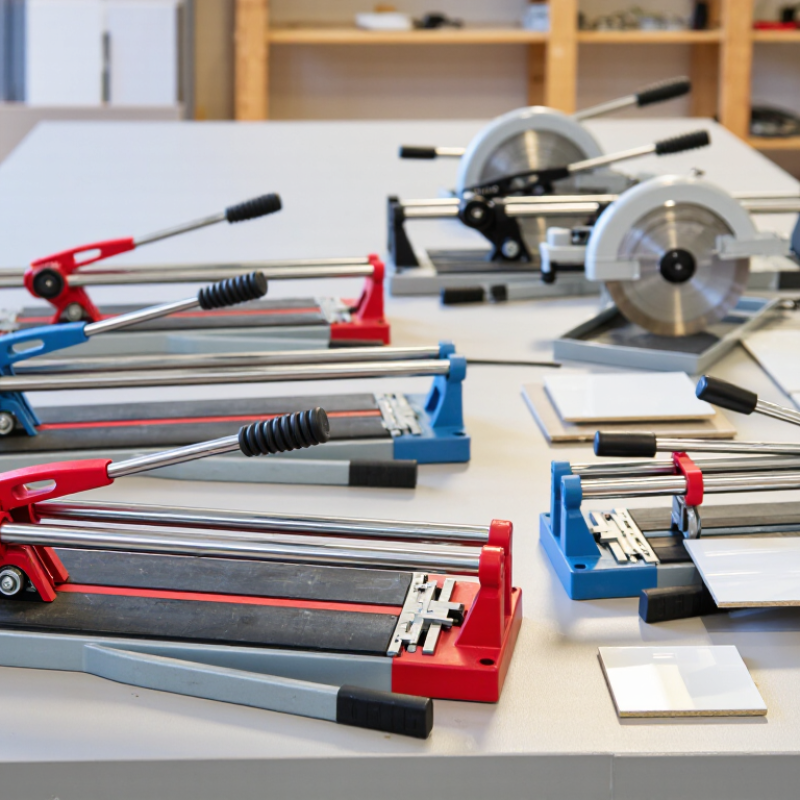
Choosing a tile cutter depends on material, project size, and cutting accuracy. A manual rail cutter suits ceramic and many porcelain tiles. It works well for straight bathroom or kitchen cuts. Its scoring wheel should move smoothly, without excessive pressure. On a ten-millimeter tile, one firm score is usually better than repeated passes.
For large porcelain slabs, an electric wet saw offers cleaner, deeper cuts. Water reduces dust and cools the diamond blade during long sessions. It is useful for floor layouts, thick tiles, and repeated production cuts. A compact wet cutter fits renovation sites, while a bridge-style machine supports larger formats. Tile nippers handle small corner adjustments, but they can leave rough edges. They are practical around pipes and irregular shapes. A handheld cutter is portable, though its results depend heavily on user control.
An angle grinder with a diamond blade can shape curves and notches. It suits experienced installers, especially near outlets or curved walls. However, it creates dust and may chip glazed surfaces. Wear suitable eye, hearing, and respiratory protection. I still misjudge fragile tile edges sometimes. That mistake wastes material quickly. Before cutting, check the tile thickness, glaze direction, and required joint width. Dry-fitting the pieces reveals problems that measurements can hide. Different regions also use different tile sizes, so a versatile cutter often gives global buyers better value.
Key Features to Compare Before Buying a Tile Cutter
Choosing among the 10 best tile cutters for global buyers requires more than comparing price and cutting length. The Harvard Joint Center for Housing Studies projected U.S. homeowner improvement spending at about $485 billion in 2024. That scale reflects continued demand for practical renovation tools. Buyers should check whether the cutter handles ceramic, porcelain, or thicker stone tiles. A sturdy base, accurate guide rail, and clear measurement scale reduce chipped edges and wasted material.
Cutting capacity matters on real job sites. Measure both maximum tile length and diagonal capacity before ordering. A tungsten-carbide scoring wheel can produce clean, controlled lines, but wheel hardness and replaceability deserve attention. Manual models are portable and need no electricity. Electric wet cutters usually manage dense porcelain better and control dust through water. The European Agency for Safety and Health at Work identifies respirable crystalline silica as a serious construction risk, so water suppression and suitable protective equipment should influence the purchase.
Do not overlook calibration. A cutter that drifts by two millimetres can ruin a visible border. I would test the fence with a spare tile before starting a full installation. That small step is easy to miss. Check spare-part availability, voltage compatibility, drainage design, and warranty support in the destination market. Some advertised cutting capacities assume ideal pressure and perfectly flat tiles. Real materials are less cooperative. A lower-cost tool may still work, but only after slower scoring and more frequent inspection.
10 Best Tile Cutters for Global Buyers
10 Best Tile Cutters for Global Buyers
The ten best tile cutters are not identical machines; they match different materials, workloads, and site conditions. Grand View Research valued the global ceramic tiles market at about USD 227.5 billion in 2023, with continued growth expected through 2030. That scale increases demand for accurate, durable cutting equipment.
For global buyers, the strongest ten choices include compact manual cutters, extended-rail manual cutters, heavy-duty scoring cutters, porcelain cutters, handheld wet saws, bridge saws, table wet saws, battery-powered models, water-recycling saws, and professional rail systems. Check cutting length, diagonal capacity, scoring-wheel hardness, guide rigidity, and replacement-part availability. A 600-millimeter cutter may suit wall tiles, but large-format slabs require a longer, more stable platform. Wet systems also need reliable pumps, splash control, and compatible electrical voltage. The U.S. Occupational Safety and Health Administration emphasizes exposure control during silica-generating tasks, so dust management should influence every purchase.
Field testing should include repeated cuts, narrow strips, textured surfaces, and slightly warped tiles. Listen for rail vibration. Inspect the cut edge under direct light. One imperfect truth remains: the most expensive cutter can still produce poor results when the operator rushes or the tile is badly supported. Buyers should compare technical data with local service coverage, shipping conditions, and regional safety requirements. Data Bridge Market Research has also identified steady expansion in tile-cutting equipment demand, but forecasts cannot replace a hands-on cutting test.
Choosing the Right Tile Cutter for Different Tile Materials
Tile cutters perform differently because tile materials vary in hardness, thickness, and surface finish. Ceramic tiles usually suit a manual score-and-snap cutter. Its wheel creates a controlled line with little dust. For small home projects, this method is fast and practical.
Porcelain is denser and often needs a stronger scoring wheel or an electric wet cutter. A wet cutter helps reduce chipping along long cuts. However, it needs clean water and careful handling around electrical parts. Large porcelain slabs demand guided equipment, stable support, and patience. Rushing one cut can waste an expensive tile.
Glass tile requires a sharp, fine scoring wheel and gentle pressure. Excess force may crack the visible surface. Natural stone, such as marble or granite, generally benefits from a diamond blade and continuous water cooling. Stone edges can remain rough, so polishing tools may be necessary. Small mosaic sheets need a compact cutter or tile nippers, but nippers can create uneven breaks. That is easy to overlook.
For global buyers, check the cutter’s maximum cutting length, thickness capacity, replacement parts, and power compatibility. Metric and imperial measurements can cause confusion. Read both carefully. Dust control also matters in indoor workshops. A cutter that suits soft ceramic may struggle with dense porcelain after several cuts. Even experienced installers sometimes choose based on price first, then regret limited adjustment control. Testing one spare tile before full installation remains a practical habit.
10 Best Tile Cutters for Global Buyers: Choosing the Right Tile Cutter for Different Tile Materials
Tile thickness and hardness strongly influence cutter selection. Thin ceramic, terracotta, glass, and mosaic tiles are often suitable for scoring tools when the cut is straight. Dense porcelain, granite, cement, and thicker quarry tiles generally require a stronger manual cutter or a wet saw with a diamond blade. The values shown are typical midpoint estimates from common material ranges; actual specifications vary by product and manufacturer.
Global Buying Factors: Safety, Compatibility, Warranty, and Shipping
10 Best Tile Cutters for Global Buyers
Global buyers should assess safety before blade speed or cutting capacity. OSHA’s respirable silica standard limits exposure to 50 micrograms per cubic meter over an eight-hour shift. Wet cutting can reduce airborne dust, but guards and eye protection still matter. Check the manual for water use, grounding, and emergency controls. Small details prevent expensive mistakes.
Compatibility requires more than matching tile thickness. ISO 13006 and EN 14411 classify tiles by production method, water absorption, and intended use. Porcelain tile may need a stronger wheel, rail, or diamond blade than standard ceramic tile. Confirm voltage, plug type, frequency, and replacement-part availability before ordering. A converter is not always a safe solution.
Warranty terms should state coverage, exclusions, service locations, and claim procedures. Legal guarantees differ across markets, so do not treat a seller’s warranty as universal protection. Shipping also needs practical review. UNCTAD’s Review of Maritime Transport reports that over 80% of global merchandise trade by volume moves by sea. That increases exposure to moisture, impact, and port delays. Ask for reinforced packaging, inspection photos, and clear damage-report deadlines. I would still test the cutter immediately after arrival. Some buyers skip this step. That is a costly oversight.