China Best Freeze Dried Cod Supplier for Global Buyers?

Choosing the China Best Freeze Dried Cod Supplier for Global Buyers requires more than comparing prices. Product quality, traceability, processing control, and communication can determine whether a shipment succeeds.

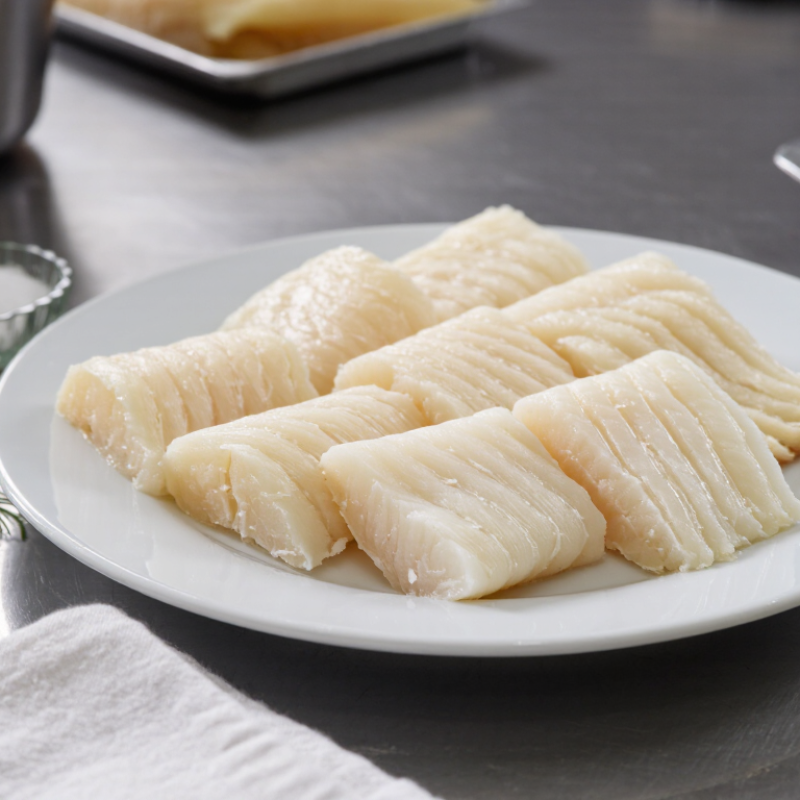
Freeze Dried Cod should retain a clean ocean aroma, pale color, and firm structure after drying. Reliable suppliers can explain their raw fish sources, freezing temperatures, drying cycles, and moisture targets. They should also provide batch records, allergen statements, laboratory reports, and clear packaging specifications. Small details matter. A damaged pouch can ruin an otherwise excellent product.

For international buyers, certifications such as HACCP, BRCGS, or ISO 22000 may support supplier evaluation. However, certificates alone do not prove consistent performance. Buyers should request samples, compare rehydration results, inspect labeling, and review recent inspection documents. A serious manufacturer welcomes practical questions and gives specific answers. Vague promises deserve caution.

Experience often reveals issues that brochures hide. Ask how the supplier handles seasonal raw-material changes, delayed vessels, damaged cartons, and customer complaints. The best partner may not offer the lowest quotation. It should provide stable quality, honest lead times, secure export packaging, and responsive after-sales support.

No supplier is perfect. Even careful factories can face harvest variation or shipping disruption. That weakness should be acknowledged, not concealed. A dependable China-based supplier explains risks early and proposes workable solutions. This guide examines the evidence global buyers should review before selecting a Freeze Dried Cod partner.

China Best Freeze Dried Cod Supplier for Global Buyers?

China’s Freeze-Dried Cod Industry and Global Market Position

China’s freeze-dried cod industry has developed around strong seafood processing capacity, cold-chain logistics, and export experience. Coastal processors can source cod, trim it carefully, and remove moisture through low-temperature vacuum drying. The result is a light product with a long storage period when sealed correctly. It also keeps much of the fish’s original flavor and protein structure.

Global buyers often view China as a flexible sourcing base. Suppliers can provide different cuts, particle sizes, packaging formats, and order volumes. Some facilities serve retail, pet nutrition, and specialized food manufacturers. Quality depends on more than appearance. Buyers should review raw material origin, processing records, moisture results, microbiological testing, allergen controls, and packaging performance. Clear documentation matters.

Not every supplier offers the same reliability. That is worth remembering. A low quotation may reflect thinner packaging, inconsistent grading, or limited testing. Samples should be checked after transport and storage, not only on arrival. The industry also faces pressure from changing fish supply, energy costs, and stricter import requirements. Chinese exporters with stable traceability and responsive technical teams are better positioned in global markets. Still, buyers should verify each shipment independently. Reputation helps, but evidence is stronger.

Key Specifications of High-Quality Freeze-Dried Cod

High-quality freeze-dried cod begins with controlled raw material, not attractive packaging. FAO’s The State of World Fisheries and Aquaculture 2024 reported 185 million tonnes of aquatic animals produced in 2022. This scale makes supplier verification essential. Buyers should request species confirmation, catch area, harvest date, and complete batch records.

Key specifications include low moisture, stable water activity, and clean rehydration. Many commercial specifications target moisture below 5% and water activity below 0.30. These values can reduce spoilage risks, but they are not universal legal limits.

Cod should show firm, pale flakes without dark edges, burnt spots, or excessive powder. After ten minutes in chilled water, the flesh should regain a mild smell and springy texture. A strong ammonia note is unacceptable.

Codex hygienic principles and HACCP-based controls should support microbial testing, foreign-material checks, and temperature records. AOAC-validated methods improve testing reliability.

Tips: Ask for moisture and water-activity results from the same production lot. Check protein on a stated basis, either wet or dry. Otherwise, comparisons become misleading. Packaging should resist oxygen and moisture, with clear seal checks. I still inspect rehydrated texture personally. Laboratory numbers can look excellent, while uneven drying remains hidden inside thick pieces. That weakness deserves attention.

How to Evaluate Chinese Freeze-Dried Cod Suppliers

How to Evaluate Chinese Freeze-Dried Cod Suppliers

China’s freeze-dried cod sector serves food manufacturers, retailers, and ingredient buyers worldwide. The FAO’s State of World Fisheries and Aquaculture 2024 reported 185.4 million tonnes of global aquatic animal production in 2022. This scale makes traceability essential, not optional. Ask suppliers for the scientific species name, catch area, vessel or farm records, and processing dates. A clear chain of custody is stronger than attractive product photographs.

Request a recent certificate of analysis for every production lot. Check moisture, water activity, protein, microbiological results, heavy metals, and foreign-material controls. Cod should retain a clean marine smell, pale color, and firm structure after rehydration. Test a sealed sample yourself. It may reveal uneven drying or excessive powder. Suppliers should explain their freeze-drying cycle, storage temperature, packaging barrier, and shelf-life testing. ISO 22000-based food-safety systems can support confidence, but certificates require verification with the issuing body.

Review export experience through shipping records, inspection reports, and responsive documentation. Compare at least three samples using the same rehydration method. Price alone is weak evidence. FAO data also shows that 89 percent of aquatic animal production was used for direct human consumption in 2022, increasing the importance of food-grade controls. One uncomfortable point remains: some suppliers present excellent paperwork but weak batch consistency. An on-site audit, independent laboratory test, and small trial order can expose that gap before a large contract.

China Best Freeze-Dried Cod Supplier for Global Buyers? - How to Evaluate Chinese Freeze-Dried Cod Suppliers

Evaluation Dimension Recommended Buyer Benchmark Evidence to Request Why It Matters
Species and Scientific Identification The product specification should state the scientific name, such as Gadus morhua for Atlantic cod or Gadus macrocephalus for Pacific cod. Product specification, raw-material label, catch documentation, and laboratory species-authentication results when required. Common names can refer to different species, affecting price, texture, allergen declarations, and import compliance.
Raw-Material Origin and Traceability Traceability should cover the fishing or farming source, landing or production date, processing lot, and finished-product lot. Traceability procedure, lot-code example, supplier records, catch certificate where applicable, and a one-step-back/one-step-forward test. Clear origin records support recalls, customs clearance, sustainability reviews, and investigation of quality deviations.
Freeze-Drying Process Control The supplier should control freezing, primary drying, secondary drying, chamber pressure, product temperature, and endpoint criteria through a validated process. Process flow chart, critical-control-point plan, validation summary, batch records, and calibration records for temperature and pressure instruments. Poor process control can cause collapse, oxidation, poor rehydration, uneven texture, or excessive moisture.
Moisture and Water Activity Use the agreed product specification; a practical buyer benchmark is moisture at or below 5% and water activity below 0.60, unless the intended application requires another limit. Recent batch certificate of analysis, test method, sample size, laboratory accreditation, and independent pre-shipment test results. Low water activity helps limit microbial growth and improves shelf stability, but it does not replace hygienic processing.
Microbiological Safety Acceptance limits must match the destination market and product use. Testing commonly includes total plate count, yeast and mold, Salmonella, and Listeria monocytogenes where applicable. Lot-specific certificate of analysis from a competent laboratory, sampling plan, corrective-action history, and environmental-monitoring summary. Freeze-drying reduces available water but does not reliably destroy all pathogens.
Chemical and Contaminant Control The control plan should address heavy metals, veterinary-drug residues when relevant, pesticide residues when relevant, biotoxins, and environmental contaminants according to destination-market rules. Targeted laboratory reports, method detection limits, approved-laboratory credentials, and a written contaminant-risk assessment. Cod and other seafood products may be subject to market-specific limits for contaminants such as mercury, lead, and cadmium.
Allergen and Ingredient Declaration The label and specification should identify fish as an allergen where required and list every added ingredient, including salt, oil, seasoning, or carrier material. Formula sheet, allergen-control program, label artwork, rework policy, and cross-contact risk assessment. Accurate allergen information is essential for consumer safety and import-market labeling compliance.
Food-Safety Management System Prefer a documented HACCP system supported by an internationally recognized food-safety certification, such as ISO 22000 or an equivalent scheme accepted by the buyer. Valid certificate, certification scope, issuing body, audit date, nonconformity records, and latest audit summary. A certificate is useful only when its scope covers the actual site and freeze-dried seafood activity.
Sensory and Physical Quality Define limits for color, odor, flavor, size, broken pieces, foreign material, bones, skin, and visible oxidation. Approved golden sample, inspection standard, defect photographs, pre-shipment inspection report, and retained samples. Objective defect definitions reduce disputes caused by subjective descriptions such as “premium” or “high quality.”
Rehydration Performance Set a documented rehydration ratio, time, temperature, and texture requirement for the final application; do not rely on a generic industry value. Standardized rehydration test, before-and-after weight data, texture notes, photographs, and comparison with the approved sample. Rehydration behavior directly affects retail, meal-kit, ingredient, and emergency-food applications.
Packaging and Oxygen Protection Packaging should protect against moisture, oxygen, light, puncture, and seal failure; the final format may use high-barrier pouches, nitrogen flushing, or an oxygen absorber when validated. Packaging specification, material compliance declaration, seal-strength test, leak test, oxygen or moisture transmission data, and packaging-compatibility study. Freeze-dried products rapidly absorb moisture after opening or package damage.
Shelf-Life Validation Shelf life should be supported by real-time or scientifically justified accelerated studies under defined temperature and humidity conditions. Shelf-life protocol, stability results, packaging configuration, storage conditions, and end-of-life sensory, moisture, water-activity, and microbiological data. A shelf-life number without test conditions cannot be meaningfully compared across suppliers.
Export and Label Compliance The supplier should adapt labels and documents to the destination market, including product name, species, net quantity, lot code, date marking, storage conditions, country of origin, allergen information, and importer details where required. Destination-market label review, commercial invoice, packing list, health or sanitary documents where required, and export registration details where applicable. Correct documentation reduces customs delays, relabeling costs, and border rejection risk.
Capacity and Batch Consistency Evaluate validated monthly capacity, number and size of freeze-drying units, normal batch size, lead time, and historical on-time performance rather than stated maximum capacity alone. Production plan, anonymized batch records, capacity declaration, delivery history, and a pilot-order performance review. Freeze-drying capacity can be constrained by chamber size, loading pattern, drying cycle, and packaging throughput.
Sampling, Audit, and Release Controls Use a written approval process with sample evaluation, pre-production confirmation, in-process controls, finished-product testing, and shipment release criteria. Quality agreement, inspection checklist, sampling plan, retain-sample policy, complaint procedure, and corrective-action response time. Independent verification is more reliable than supplier claims or product photographs alone.
Commercial Evaluation Compare total landed cost, minimum order quantity, tooling or setup fees, payment terms, Incoterms, freight assumptions, inspection cost, and potential import duties. Detailed quotation, pro forma invoice, packaging configuration, carton dimensions, shipment weight, lead-time schedule, and agreed quality terms. The lowest unit price may not be the lowest total cost after testing, freight, duty, rework, or rejected shipments.
Buyer note: Benchmarks shown above are evaluation starting points, not universal legal limits. Final specifications and acceptance criteria should be confirmed against the importing country’s current food, seafood, labeling, contaminant, and packaging regulations.

Production Standards, Certifications, and Export Compliance

A reliable freeze-dried cod supplier should prove more than low pricing. FAO’s The State of World Fisheries and Aquaculture 2024 reported 185.4 million tonnes of global aquatic production in 2022. That scale makes traceability essential. Buyers should request vessel or farm records, landing documents, lot codes, and processing dates. Each lot should connect raw cod to the final pouch.

Production controls should follow Codex HACCP principles. Critical checks include receiving temperature, parasite control, freeze-drying conditions, foreign-material screening, and seal integrity. Testing should cover moisture, water activity, microbiological safety, heavy metals, and undeclared allergens. ISO 22000 certification can support food-safety management, but a certificate alone proves little. Audit scope and expiry dates matter. Ask for recent laboratory reports.

Export compliance changes by destination. Shipments to the European Union may require approved establishments, health certificates, correct labeling, and catch documentation under fisheries-control rules. United States shipments require applicable facility registration, prior-entry procedures, and importer verification under food-safety regulations. Packaging should show species, net weight, origin, batch number, storage guidance, and rehydration instructions. The pouch should feel dry and rigid, not soft. Rehydration should be tested in measured water. Some suppliers provide impressive documents but weak batch consistency. Independent inspection remains worthwhile.

Ordering, Packaging, Shipping, and Supplier Management

China’s Best Freeze-Dried Cod Supplier for Global Buyers?

Selecting China’s best freeze-dried cod supplier requires more than comparing export prices. Ordering should begin with a written product specification. Include cod species, cut size, moisture target, net weight, and acceptable color variation. Request recent test reports and production samples before approving a purchase order. A small sample can reveal texture problems that photographs hide. Confirm lead time, minimum order quantity, payment terms, and replacement procedures. Keep every agreement in one controlled document.

Packaging protects quality during long international transport. Inner bags should resist moisture and seal tightly. Outer cartons need strong corners, clear lot codes, and stable pallet stacking. Ask for carton dimensions before booking freight. This detail affects container loading and total shipping cost. Each lot should show production dates, storage guidance, and traceability information. Labels must match the destination market’s requirements. Errors here are expensive.

Shipping plans should define temperature control, humidity protection, insurance, and document responsibilities. Although freeze-dried products are shelf-stable, poor storage can still damage texture and flavor. Choose a freight route with realistic transit time, not merely the lowest quote. Supplier management needs regular inspections, shipment photos, inventory updates, and corrective-action records. Monthly reviews can identify repeated delays or inconsistent packing. The process is not flawless. Even experienced buyers should reassess forecasts, inspection depth, and backup suppliers after each shipment. Reliability grows through records, direct communication, and measured follow-up.

Call Now Button