Finding the right Plush Toys Factory in China can shape your product’s safety, quality, and long-term reputation. A low quotation may look attractive, but it can hide weak stitching, inconsistent stuffing, or poor communication. The cheapest option is rarely the safest choice.
Richard Gottlieb, a longtime toy-industry consultant, puts it simply: “The right factory is a partner, not simply a price.” This idea deserves careful attention. A capable Plush Toys Factory should explain its materials, production process, sample policy, minimum order quantity, and quality controls clearly. It should also provide practical evidence, not only polished promises.
Look closely at the details. Ask for factory videos, recent samples, material specifications, and testing records. Inspect embroidered eyes, seam strength, fabric softness, and filling recovery after compression. A small sample may reveal loose threads or uneven shapes. Those problems can become expensive at scale.
Certification matters. Confirm whether the factory can support relevant international safety requirements for your target market. Do not accept unclear documents. Verify them when possible.
Experience helps, but it is not enough. Some factories have attractive websites and limited real capacity. Others may communicate slowly but produce consistently. This can be easy to miss.
A responsible sourcing process includes an independent audit, a written quality standard, and a pre-shipment inspection. Keep expectations measurable. Define acceptable defects before production begins.
You may not find a perfect supplier. Few buyers do. The real goal is a transparent Plush Toys Factory that improves through feedback, protects product quality, and treats safety as a daily responsibility.
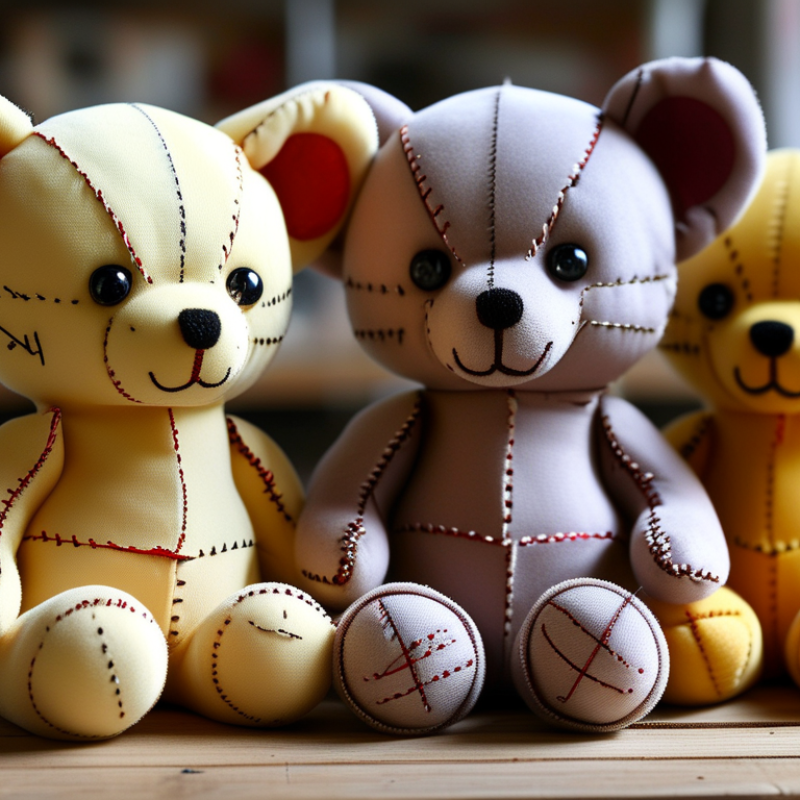
A reliable factory search starts with a precise product brief. Grand View Research estimates that the global plush toys market reached about USD 7 billion in 2023, with continued growth expected through 2030. Demand is strong, but vague specifications still create costly mistakes. State the toy’s finished size, fabric type, filling weight, colors, stitching method, and target age. Add a simple drawing with measurements. A 25-centimeter toy should not become 28 centimeters after sampling.
Decide whether the plush toy needs embroidery, plastic eyes, sound modules, magnets, or removable clothing. For children under three, avoid small detachable parts and request age-appropriate safety testing. Depending on the destination market, ask for relevant reports covering mechanical safety, flammability, chemical limits, and labeling. Testing should match the final sample, not an earlier version. This detail is often overlooked.
The brief should also include packaging dimensions, carton quantity, logo placement, barcode space, and acceptable defect limits. According to a 2024 industry outlook from Fortune Business Insights, the plush toy market is projected to grow steadily during the decade. That growth does not excuse weak quality control. Request a pre-production sample, a signed specification sheet, and inspection photos from critical production stages. I would also define a tolerance range for color and size, because perfect consistency is difficult with soft materials. Leave room for correction.
Research and Shortlist Qualified Chinese Plush Toy Factories
China remains a major sourcing base for plush toys. The China Toy and Juvenile Products Association reported approximately US$31.1 billion in toy exports in 2023. However, export scale does not prove factory capability. Grand View Research estimates the global stuffed and plush toys market exceeded US$7 billion in 2023, increasing pressure on quality, safety, and delivery control.
Create a shortlist of five to eight factories. Check their registration details, export history, production photos, and recent audit records. Ask for evidence of testing under EN 71, ASTM F963, or other target-market requirements. Request samples with the same fabric, stuffing, embroidery, and accessories as your intended product. Examine seams, loose fibers, odor, stitching density, and wash performance.
See the production floor.
A factory should explain its minimum order quantity, sampling fee, lead time, and defect-handling process in writing. Verify whether cutting, sewing, filling, and packing happen in-house. Some suppliers present trading offices as factories, which can weaken traceability. My first shortlist was too broad; I focused too much on attractive samples. That was a mistake. A factory’s corrective-action records often reveal more than its showroom. Compare quotations carefully, because unusually low prices may hide thinner fabric, weaker filling, or incomplete testing. Keep inspection reports, approved samples, and revision records before placing a larger order.
A capable factory should prove more than attractive samples. Ask for its business license, production address, equipment list, and recent audit records. Visit the sewing, stuffing, embroidery, and metal-detector areas when possible. Check whether one team controls incoming fabric, filling weight, seam strength, and final packing. The details matter. A polished showroom can hide weak production controls.
Review current certificates carefully. ISO 9001 shows a quality-management system, but it does not prove toy safety. The ISO Survey 2022 recorded 1,265,216 ISO 9001 certificates worldwide, so certification alone is not a strong factory comparison tool.
Request reports covering EN 71, ASTM F963, or China’s GB 6675 requirements, depending on the target market. Confirm the report names the same factory, material, product, and test version. Reports from an accredited laboratory are more reliable. Still, documents can become outdated.
The European Commission’s Safety Gate 2023 report recorded 3,412 product alerts, with toys representing 13% of notifications. That figure deserves attention. Ask how the factory controls loose eyes, small parts, flammability, dye migration, and fiber contamination. Request batch numbers and a written recall procedure.
I would also order a pre-production sample and an independent inspection before shipment. My judgment is not perfect; a clean audit cannot predict every future defect. Repeat testing after material changes. Good factories accept this scrutiny instead of treating it as distrust.
How to Find the Best Plush Toys Factory in China?
Finding a dependable plush toys factory should begin with physical samples, not attractive catalog photos. Ask each factory to make the same design using identical fabric, size, and filling requirements. This creates a fair comparison. Examine stitching around the ears, eyes, seams, and embroidered details. Pull the fabric gently. Loose threads often reveal weak quality control. Check the sample’s weight, softness, shape recovery, and odor after unpacking. A cute prototype can still hide poor construction.
Compare quotations line by line. Confirm whether prices include sampling, packaging, labels, freight preparation, and revisions. Ask about fabric substitutions, because a lower quote may use thinner material. Minimum order quantities also affect your real budget. A factory accepting 300 pieces may charge more per unit than one requiring 1,000 pieces. Calculate total spending, including sample fees and possible mold or setup costs. Cheap samples can mislead.
Production terms need equal attention. Request a written timeline covering sample approval, material purchasing, production, inspection, and packing. Confirm the deposit percentage, balance timing, payment records, and revision limits. Ask how the factory handles defective pieces and delayed shipments. Regular production photos can help, but they are not a substitute for inspection. I once underestimated packaging changes, which added several days and unexpected costs. That mistake taught me to document every detail before production begins. A reliable factory should answer clearly, provide consistent samples, and admit practical limits. Industry experience matters, but careful verification matters more.
Non-company-specific planning benchmarks for comparing samples, pricing, minimum orders, and production terms.
The benchmark compares four common sourcing profiles for a 20 cm custom plush toy. Lower unit prices, MOQs, and lead times can improve purchasing efficiency, while sample and production timelines vary with design complexity, embroidery, accessories, packaging, and testing requirements.
Figures are indicative China OEM/ODM market-planning ranges rather than supplier quotations. Confirm final terms with factories after reviewing samples and technical specifications.
How to Find the Best Plush Toys Factory in China?
Communication is the first reliability test. Ask the factory to confirm materials, dimensions, packaging, and delivery dates in writing. A capable team should answer clearly, not only quickly. Request a sample timeline with named responsibilities. Watch for vague replies. They often become costly delays later.
Quality control must be visible on the production floor. Check incoming fabric inspection, needle control, stuffing weight, seam strength, embroidery accuracy, and metal-detector procedures. Ask for batch records and corrective-action reports. The 2023 EU Safety Gate report recorded toys as 13% of reported dangerous-product alerts, showing why documented testing matters. Request testing against applicable requirements, including EN 71 or ASTM F963, depending on the destination market. Use ISO 2859-1 sampling plans for pre-shipment inspection. A report without traceable batch numbers is weak evidence.
Long-term reliability needs more than a successful first order. Review production capacity, backup material suppliers, worker training, and complaint response times. Ask for two recent customer references, preferably for similar plush designs. During a factory visit, compare the approved sample with goods on the line. Small differences matter. I would not rely on polished audit photos alone; that approach can fail. The 2023 Deloitte Global Chief Procurement Officer Survey reported continuing supply-chain disruption as a major procurement concern, so contingency planning deserves direct questions. A dependable factory shares problems early, even when the answer is uncomfortable.
| Evaluation Area | Key Dimension | Recommended Benchmark | Verification Evidence | Risk Level if Not Met |
|---|---|---|---|---|
| Communication | Initial response time | Acknowledge technical and commercial inquiries within 1 business day. | Email records, quotation timestamps, and a defined communication procedure. | Medium |
| Specification accuracy | Quotation, tech pack, materials, dimensions, packaging, and tolerances should match the approved specification. | Signed specification sheet, revision history, and approved golden sample. | High | |
| Sample revision control | Every sample should carry a date, revision number, material list, and approval status. | Sample tags, approval forms, and controlled artwork or pattern files. | High | |
| Problem escalation | Nonconformities should be reported with root cause, corrective action, owner, and completion date. | Corrective and Preventive Action reports, meeting records, and closure evidence. | High | |
| Quality Control | Incoming material inspection | Fabric, filling, thread, accessories, labels, and packaging should be inspected before production use. | Incoming inspection records, material specifications, and supplier traceability documents. | High |
| In-process inspection | Critical operations such as stitching, embroidery, stuffing, and attachment of components should have documented checks. | Line inspection records, defect photographs, operator instructions, and rework logs. | High | |
| Final inspection sampling | Use a documented sampling plan. ANSI/ASQ Z1.4 is commonly used; AQL 2.5 for major defects and AQL 4.0 for minor defects are common commercial settings. | Third-party or internal inspection report showing lot size, sample size, defect classification, and acceptance result. | High | |
| Safety testing capability | Testing should be aligned with the destination market, such as EN 71 for the European Union or ASTM F963 and applicable U.S. requirements for the United States. | Current laboratory reports that identify the exact product, materials, model, test methods, and production date. | Critical | |
| Small-part and seam security | Eyes, noses, buttons, snaps, and other attachments should pass the applicable pull, torque, tension, and seam-strength requirements. | Test records, destructive test samples, seam inspection data, and production-limit samples. | Critical | |
| Chemical compliance | Materials should meet applicable chemical restrictions, including limits for restricted substances under the destination market’s regulations. | Laboratory test reports, supplier declarations, material composition records, and batch traceability. | Critical | |
| Long-Term Reliability | Production capacity transparency | Capacity claims should distinguish normal capacity, peak capacity, lead time, and reserved capacity for the order. | Capacity plan, production schedule, machine list, workforce plan, and recent order-loading data. | Medium |
| Material supply continuity | Critical fabrics, filling materials, trims, and packaging should have approved alternative sources or safety-stock arrangements. | Approved vendor list, material risk register, lead-time records, and contingency plan. | High | |
| Traceability | Finished goods should be traceable to production date, order, material batch, inspection records, and shipment details. | Batch codes, production records, warehouse logs, and shipment documentation. | High | |
| Corrective-action effectiveness | Repeated defects should show documented root-cause analysis and verified corrective action rather than repeated rework. | Historical defect reports, corrective-action records, and follow-up verification results. | High | |
| Business continuity | The factory should maintain documented plans for equipment failure, power interruption, labor shortages, quality incidents, and logistics disruption. | Business continuity plan, backup equipment information, emergency contacts, and recovery-time objectives. | Medium |